
Foraging starts with four Fs, as Wild Food UK sums up what foragers collect: fruit, foliage, flora and fungus. The Woodland Trust's advice is clear: never eat a wild plant or fungus unless you are absolutely certain what it is. People have died after mistaking hemlock for wild carrots. Take no more than you plan to consume, collect only where a species is abundant, and know the law where you are: England and Wales and Germany each have their own rules.
The Woodland Trust describes foraging for wild food as a way to connect with nature.
Wild Food UK warns that without knowing the rules of foraging you could damage the local ecology or put yourself or others in danger.
The Woodland Trust says never to consume a wild plant or fungus unless you are absolutely certain of its identification. Wild Food UK asks for multiple sources of positive identification before you eat any wild food.
Germany's Federal Institute for Risk Assessment (BfR) advises collectors not to eat self gathered herbs and plants when in doubt. As a general rule, it says plants should only be gathered for eating if your knowledge is sound enough to tell them apart from poisonous species.
US Poison Control's advice for anyone interested in foraging wild plants is to join an organization with experienced members. Check any unknown plant or berry against a clear field guide or with an experienced person before eating it, it says.
The Woodland Trust recommends taking a good field guide to confirm species in the field and avoid confusion.
US Poison Control also warns that mushroom knowledge from one region or country cannot be relied on in another.
The BfR warns that wild garlic leaves look similar to those of poisonous lily of the valley and very poisonous autumn crocus. Fatal poisoning after eating autumn crocus is possible, so the BfR says wild garlic should only be gathered with very precise knowledge of the differences.
Rubbing a piece of leaf between your fingers is usually enough to tell wild garlic from its lookalikes, the BfR says. If the typical garlic smell does not appear, leave the plant and wash your hands thoroughly straight away. The test has a catch: smell left on your hands from an earlier sample can give a false result. That is why the BfR says collectors should know the plant well, with all its features.
Cow parsley resembles the very poisonous spotted hemlock, a potentially fatal mix up, and the BfR strongly advises against gathering it unless you have very good plant knowledge. It also warns that sorrel can be confused with poisonous arum, blueberry with poisonous deadly nightshade, and comfrey with poisonous foxglove.
The Woodland Trust says fungi can be notoriously difficult to identify, and that if you are unsure it is best to leave them alone. US Poison Control says never to pick and eat wild mushrooms unless they have been identified by an expert. Cooking does not make a poisonous mushroom safe, and symptoms can be delayed for many hours.
The German Mycological Society (DGfM) says to collect only the species you know for certain. Of unknown mushrooms you can take 2 or 3 specimens, ideally at different stages of development, and work on identifying them at home. Keep them apart from the rest of your basket, because even small pieces of a deadly poisonous mushroom can spoil the whole basket. In your own interest, the DGfM says, do not eat mushrooms that have not been identified with certainty and/or cleared for eating by a mushroom expert.
In Germany, mushroom experts certified by the DGfM can identify the mushrooms shown to them and assess their value as food. The DGfM shows experts near you on a map. Identification beyond doubt from pictures alone is often impossible. The DGfM also says not to rely on self appointed mushroom experts or apps.
The Woodland Trust's guidelines start with damage: keep your harvest to what you will really use, stay on paths and avoid trampling the spot. Uprooting plants is harmful, so pick leaves or berries with care and in moderation.
Collect flowers, leaves, fruits and seeds only where they are in abundance. Of fungi, take only mushrooms with opened caps, which are likely to have dropped their spores, and leave small button mushrooms. Leave plenty behind, the Woodland Trust says, so there is enough for wildlife and so plants and fungi can regenerate.
Wild Food UK, whose code is written for the UK, adds a limit of its own: never pick more than half of what you find of anything from anywhere.
For mushrooms the DGfM recommends a basket, because plastic bags are completely unsuitable.
In England and Wales, section 4 of the Theft Act 1968 says a person who picks mushrooms growing wild, or flowers, fruit or foliage from a plant growing wild, does not steal what they pick unless they do it for reward, for sale or for another commercial purpose. That section deals with property and theft and says nothing about access to land.
In England and Wales, the Wildlife and Countryside Act 1981 makes it an offence to intentionally pick, uproot or destroy a wild plant listed in its Schedule 8. It is also an offence for anyone who is not an authorised person to intentionally uproot any other wild plant. Scotland has its own version of this section.
In Germany, the Federal Nature Conservation Act lets anyone carefully take wild flowers, grasses, ferns, mosses, lichens, fruit, fungi, tea and medicinal herbs and twigs in small quantities for personal use, from places not subject to a ban on entry. Species listed in Annex V of the EU Habitats Directive are excluded by a separate ban, and stricter protection rules stay in force. Taking wild plants commercially needs a permit from the nature conservation authority.
The DGfM says many edible mushrooms such as porcini and chanterelles are protected in Germany and may only be collected in small quantities for personal use, with about 1 to 2 kg per collector per day as a guide. Some species are fully protected. The Federal Forest Act allows entering woods for recreation, at your own risk, and leaves the details to the federal states.
The Woodland Trust's month by month guide for the UK looks for fruits and nuts in January, nettles and early flowers in February, and fresh greens and herbs in April. In August it lists blackberries, rowan berries and crab apples as ripening, and in October it turns to berries and nuts.
Climate change and weather can affect when wild foods come into season, the Woodland Trust says, so treat such guides as general guidance and check what is happening locally. The Woodland Trust also says to take plants and fungi only when you are sure what they are.
For plants, the BfR says to remove any remains from the mouth and keep them for the doctor, then call a poison centre or go to a doctor's practice or hospital. Do not induce vomiting, and do not use milk or salt water. If you are worried someone has eaten poison hemlock, US Poison Control says to act immediately and go to an emergency department, and not to manage symptoms at home.
For mushrooms, the DGfM says severe symptoms mean hospital admission, with the emergency services on 112 if needed; with mild symptoms or if you are worried, contact a poison centre. The DGfM asks you to keep to its order: keep any peelings, leftovers or vomit for the paramedics or doctor, do not lose time on web searches or mushroom apps, and tell everyone who shared the meal. Without medical instruction, give the person nothing to eat or drink, and do not induce vomiting.
If a child shows signs of a life threatening condition, the BfR says to call 112 immediately. The Federal Office of Consumer Protection and Food Safety (BVL) publishes a list of poison centres in Germany, for example Berlin 030 192 40, Bonn 0228 192 40, Erfurt 0361 730 730, Freiburg 0761 192 40, Göttingen 0551 192 40 and Munich 089 192 40. In Austria the number is +43 140 643 43. In Switzerland call 145. In the US, call 1-800-222-1222.
In the UK, the NHS says to call 999 or go to A&E if you think someone may have swallowed something harmful, and to call NHS 111 if you are not sure whether it is harmful. Do not drive to A&E; ask someone to drive you or call 999 for an ambulance. Do not give the person anything to eat or drink. Symptoms may take a few hours or days to start, so get medical advice quickly.
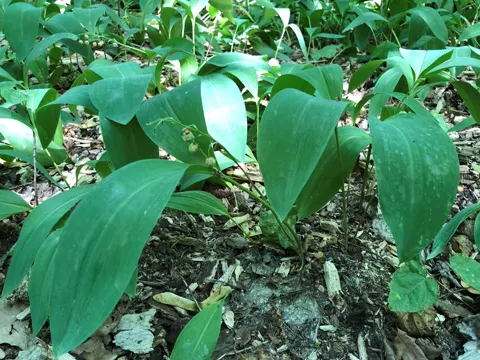
Poisonous, and young wild garlic leaves resemble its leaves. A rubbed piece of leaf without the typical garlic smell points away from wild garlic, but smell left on your hands from an earlier sample can mislead.
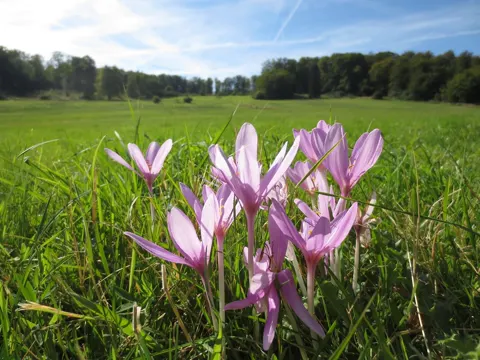
Young wild garlic leaves also resemble its leaves. The BfR calls it very poisonous, and fatal poisoning after eating it is possible.

Very poisonous and resembles cow parsley. First Nature lists purple spotted stems and fern like leaves among its features, but US Poison Control warns that spotting or bad smell might not be present at some phases of the life cycle.
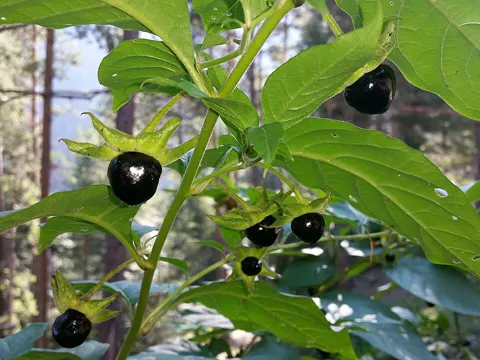
The BfR lists it among plants with a severe poisoning risk, and says it can be confused with blueberry. A bushy plant that grows to two metres and occasionally more, with bell like purple brown flowers and shiny green berries that turn black when fully ripe.
Photos are for orientation only: a photo alone is not enough to identify a species.
When in doubt, the BfR advises collectors not to eat self gathered herbs and plants. If poisoning is suspected, call a poison centre as quickly as possible or get a doctor. If you are worried someone has eaten poison hemlock, go to an emergency department immediately.
Wild Food UK sums up what foragers collect as fruit, foliage, flora and fungus. The Woodland Trust speaks of foraging for wild food.
In England and Wales, picking wild mushrooms, or flowers, fruit or foliage from wild plants, is not theft unless it is for reward, sale or another commercial purpose, but that section says nothing about access to land. Intentionally picking, uprooting or destroying a Schedule 8 plant there is an offence, and so is intentionally uprooting any other wild plant unless you are an authorised person. In Germany, anyone may carefully take wild flowers, fruit, fungi and the other listed groups in small quantities for personal use, from places not subject to a ban on entry. Annex V species and stricter protection rules are excepted, and taking wild plants commercially needs a permit.
The Woodland Trust says to take no more than you plan to consume. Wild Food UK says never to pick more than half of what you find. For protected mushrooms in Germany, the DGfM gives about 1 to 2 kg per collector per day as a guide, and some species are fully protected.
The Woodland Trust says fungi can be notoriously difficult to identify, and that if you are unsure it is best to leave them alone. US Poison Control says never to pick and eat wild mushrooms unless an expert has identified them.
Forage shows you the species in your region and pings you when the season starts.


All information without guarantee. This text is orientation on season and habitat, not an identification guide, and it makes no claim about whether any specific plant or mushroom is edible. Many species have toxic, some deadly, lookalikes. Never eat or use anything that has not been identified with certainty by an expert, such as a qualified mushroom inspector. We accept no liability for any harm arising from the use of this information. If you suspect poisoning, call your local poison control center or emergency services right away. Mind conservation law and property rights.
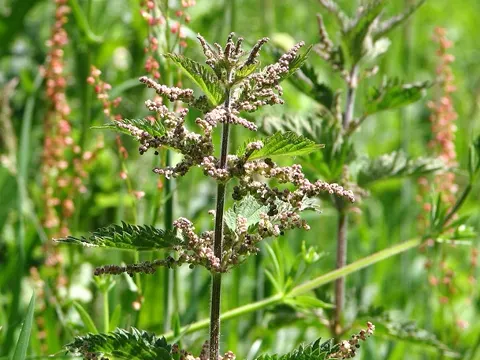 NettleUrtica dioica
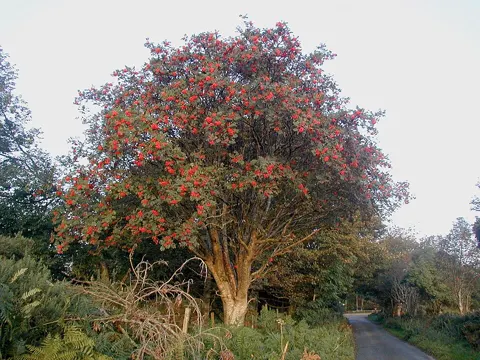 RowanSorbus aucuparia
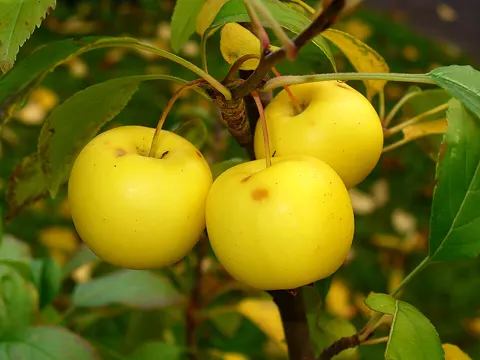 Crab appleMalus sylvestris